


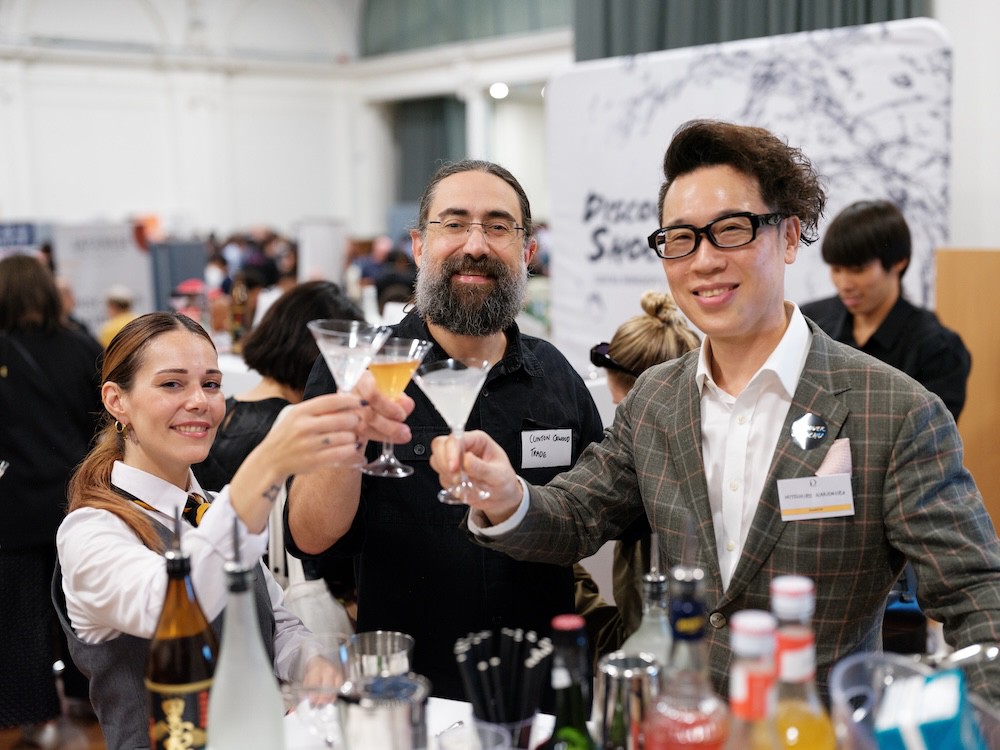
Japanese spirit shochu doesn’t only play well with cocktail ingredients from its home country. Class attended one of a series of hands-on workshops at this year’s Drink Japan event in London that set out to prove this.
Helmed by Mitsuhiro Nakamura, chief mixologist at The Nine Elms Bar at Park Hyatt London River Thames, these sessions were held within the event’s Discover Shochu area, where attendees could taste various examples of this traditional spirit. In the workshops, Nakamura talked about shochu’s history, and its distinctive production process, before moving onto a tasting of a trio of representative examples.
First up was a barley shochu, Iichiko Silhouette from the Oita Prefecture, with light grain and nutty notes, as well as some spicy character. The rice shochu, Ginka Torikai from the Kumamoto Prefecture, showed some parallels with sake, unsurprisingly – notes of pear, melon and white flowers. In contrast, the sweet potato shochu, Kuro Kirishima from the Miyazaki Prefecture, was more reminiscent of an aged spirit, with a toasted character and notes of cacao. What they all had in common was their ability to showcase their raw material, as well as a light elegance, in part owing to their 25% ABV.
With the introduction complete, it was time for us to roll our sleeves up and put what we’d learnt into practice. Attendees were provided with cocktail equipment and an array of typically Western cocktail ingredients – everything from Aperol to Benedictine, via bitters, vermouth and a selection of fruit juices and syrups. All three of the shochus we’d tasted were fair game, and Nakamura was on hand, together with Paula Kimberly Gonzalez Cumia of Roka’s Shochu Lounge, to offer guidance.

Having noted the parallels between the sweet potato shochu and whisky, we kicked things off with a classic Manhattan-style drink. The shochu brought richness and toasted notes, but also a lightness and drinkability to the cocktail, not to mention some vegetal complexity.
The presence of some citrus and agave, meanwhile, led to thoughts of Margaritas and Daiquiris. While the rice-based shochu seemed the right choice, Cumia suggested pairing it with the sweet potato for a split-shochu base. Taking the lighter flavours of the shochus into account, and their lower ABV compared to tequila or rum, she also advised adjusting the balance to take this into account, as well as adding a lower proportion of citrus. The result was perfectly balanced, light and bright, with a nod to the drinks that had inspired it, but highlighting some distinctive shochu flavours too.
Other workshop attendees explored a variety of other cocktail styles, finding that the barley and rice shochus made exceptional riffs on the Martini, for example, and that all three styles paired well with the fruit-based ingredients on the table too. With their distinctive flavours yet relatively light ABVs, there’s clearly vast potential when it comes to pairing these spirits with all manner of cocktail ingredients.
It’s unlikely anyone walked away from these sessions not convinced about shochu’s cocktail potential, and it’s certain that no one left without an excellent drink either.
Shochu workshop cocktail ingredients
Below are all of the ingredients that attendees had access to when creating their cocktails:
- Aperol
- Bénédictine
- Tomato Liqueur
- Dry Vermouth
- Tonic Water
- Soda Water
- Lemonade
- Pineapple Juice
- Cranberry Juice
- Lemon Juice
- Lime Juice
- Elderflower Syrup
- Passion Fruit Syrup
- Agave Syrup
- Angostura Bitters
- Peychaud’s Bitters