


Dark Bar's Patrick Fogarty is back with his third instalment on controlling the variables when batching cocktails, with his attention this time switching to dilution and abv.
In this third article I want to discuss how batching does not just improve consistency but how, in certain serves, it creates a perfect drink. This often comes down to two intertwined variables: the dilution of the drink with water and its alcohol by volume.
Just as citrus controls acidity and spice controls heat, dilution and ABV control texture and structure.
Dilution in drinks made à la minute usually comes from the ice we use. This introduces one of the biggest variables in cocktails, all changed by a single ingredient. Over-dilution can happen in many ways. The method of mixing and its duration, whether shaken or stirred, the temperature and size of the ice, the length of contact with the liquid, the temperature of ingredients in the bar, and even the time it takes to build a round during service can all cause over-dilution and ruin a drink.
Guests rarely notice when a drink is perfectly diluted, but they always notice when it isn’t. A cocktail that starts cold and rich but ends watery and thin never leaves a good impression.
Too much water can thin subtle flavours and mute key notes in a drink. It changes viscosity and mouthfeel. In many modern bars you will now find batched drinks that are both chilled and diluted to an exact ratio. This is not just for speed of service or to show off clarifying skills. It is about control.
A lot of bars now place large cubes of ice in the glass in the freezer before service so that both the glass and ice are at the same temperature. The chilled batched liquid flows on the ice with-out cracking the ice or the need for tempering the ice. For some, this speeds service slightly, but in reality it removes the variables of over-dilution and warming. It gives the guest the perfect drink from first sip to last.
Over-dilution also changes the ABV, which in turn affects how the alcohol tastes in the drink. Many bartenders think about ABV but rarely understand how important it is to flavour. Put simply, dilution is the percentage of water added during preparation, chilling and storage. Ice does not only chill, it also dilutes. The colder the liquid, the slower the dilution rate, but the process never stops. Water opens up flavour at the right level and helps balance, but too much flattens it. Different spirits and sugars also hold water differently. Drinks with higher sugar content usually need less added water.
It is important to understand the role of ABV. Alcohol carries flavour and aroma compounds; it is both a solvent and a preservative. Lowering the ABV increases perceived sweetness and citrus sharpness, while higher ABV sharpens spice and bitterness. The target ABV for most balanced cocktails is between 14 and 24 per cent but can reach the mid-thirties depending on the style, such as stirred spirit-forward drinks compared to citrus-led sours. In batching, adjusting ABV is critical for both shelf stability and flavour integrity over time. Temperature also affects perception. A 22 per cent ABV drink served cold will taste softer than the same drink at room temperature because alcohol becomes more volatile as it warms.
At Dark Bar we often look at the freezing point depression, which is the principle that allows higher-ABV liquids to remain stable and pourable in the freezer. This is the science behind the frozen martini, straight from freezer to glass.
We measure starting ABV, target ABV, and post-dilution ABV. We use an Alex 500 by Anton Paar, but it can be calculated mathematically just as effectively. Measuring and recording these levels also means the same drink tastes identical no matter who is behind the bar or which venue serves it. It takes personality out of the process and leaves precision.
Controlling dilution also preserves aroma. The right level of water helps lift lighter aromatics instead of washing them out.
Case Study: Crystal Bird
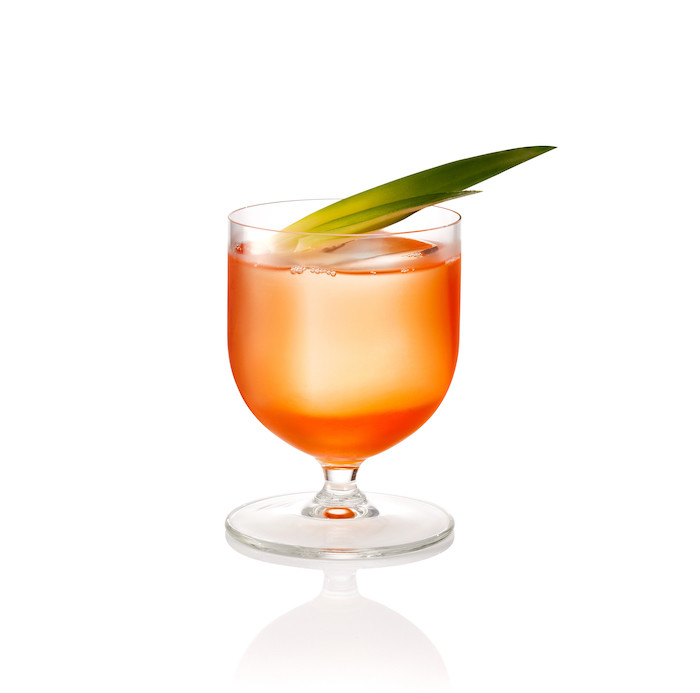
We produce Crystal Bird, a clarified riff on the Jungle Bird, at Dark Bar. Every element of production is controlled to maintain the perfect dilution ratio and keep the ABV and flavours strong. We do not clarify the whole drink as some clarification methods strip not just fibre but flavour, and add too much water which lowers the ABV. Instead, we clarify the cloudy ingredients, pineapple and lime juices, separately to create clean, clear liquid. We then combine a light Caribbean rum with a hint of Jamaican funk, Campari and Aperol to soften the bitterness, and finish with a dash of tiki bitters. This method keeps unnecessary water out of the drink, using only the clarified juices for dilution. It can be served straight into a chilled coupe or over block ice in a frozen glass. Either way the texture and ABV remain consistent.
Case Study: Low Key Old Fashioned
Alex Taylor of Low Key in Cardiff shared his Old Fashioned with us. It is a playful jab at our American cousins, made entirely from ingredients from countries currently giving Trump the side-eye.
25 ml coconut-washed Stauning Høst Whisky 41.5% ABV
25 ml Pike Creek Rye Whisky 42% ABV
5 ml 2:1 simple syrup
5 ml Paragon Palo Santo
1 dash Angostura Bitters 44.7% ABV
10 ml filtered water
Alex serves this straight from the water dispenser of a modern fridge, poured over block ice in a frozen glass with expressed orange zest. No over-stirring, no wasted motion, just the perfect Old Fashioned at the perfect temperature every time. This drink shows how batching removes the variable of over-dilution. Locked in at 29.5 per cent ABV, it delivers rich flavour and a velvety texture. The small amount of water releases the flavour compounds in the whisky and lets the spirit shine.
Citrus, spice, dilution and ABV all work together. When each is measured and balanced, you stop chasing consistency and start delivering it by design. When you control dilution and ABV you are not just making drinks consistent. You are setting the structure that lets every other flavour shine.
In my final article I will write about sweetness, a variable that for me affects all the others and is often the greatest offender in a badly balanced drink.